Avoid unsafe stormwater
Outdoor runoff and floodwater can pick up pollutants. Avoid wading through standing water, especially where electrical hazards or an unknown water source may be present.
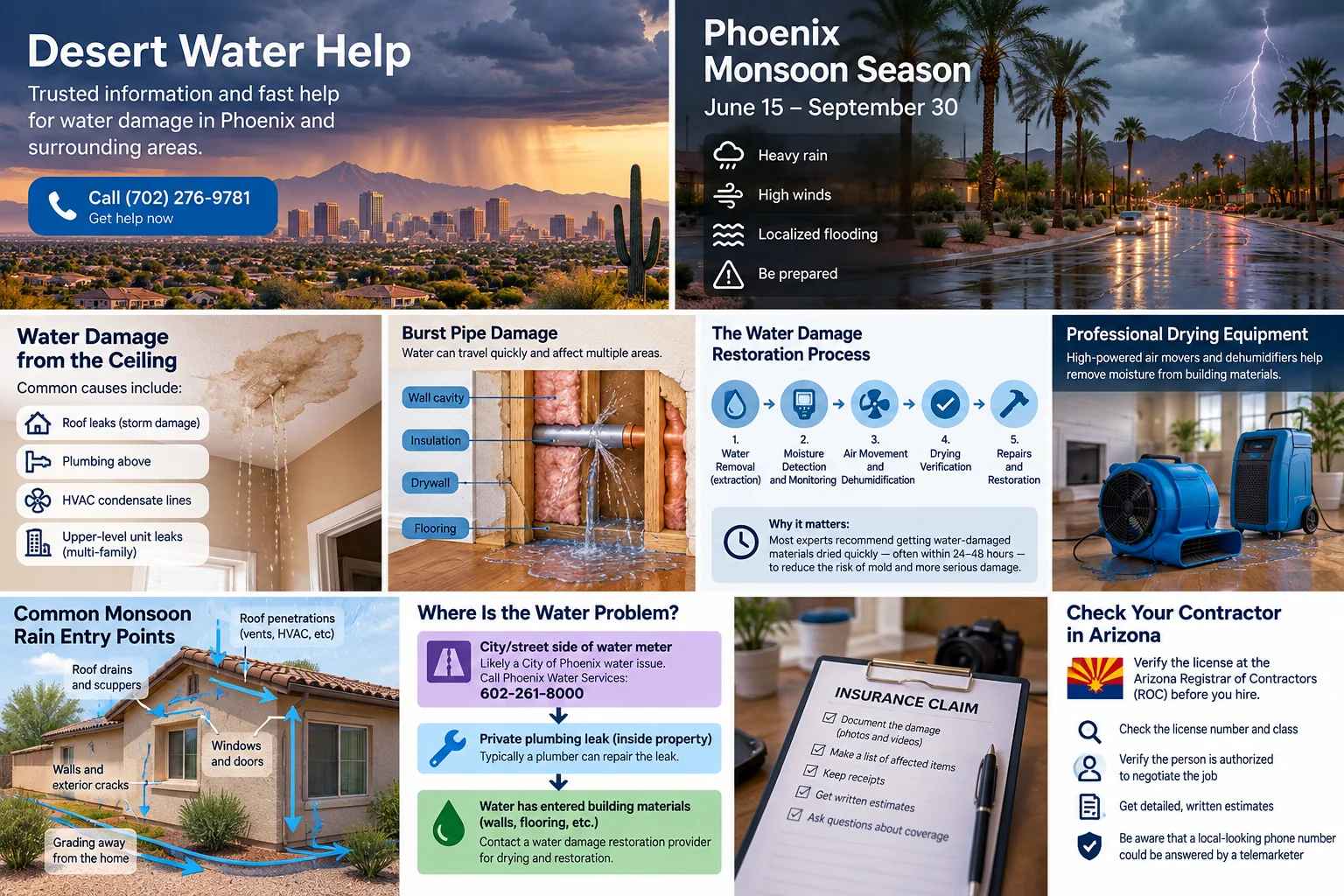
Roof and opening intrusion
Wind-driven rain may enter through damaged roofing, windows, doors or other building openings. The exterior source may need repair before interior drying can be completed.
Document damage when safe
The City of Phoenix recommends photographing property damage for insurance purposes after storms when it is safe to do so.
A Phoenix monsoon checklist
Do not drive through flooded roads or enter standing water where electrical hazards may exist. When it is safe, photograph property damage. If rain entered through the roof or another opening, remember that stopping the exterior source and drying the interior are separate tasks. Outdoor runoff or unknown water can carry contaminants and may require precautions beyond an ordinary indoor supply-line loss.
Why this is genuinely local
The City of Phoenix defines monsoon season as June 15 through September 30 and says storms peak around mid-July to mid-August. Phoenix emergency guidance identifies thunderstorms, high winds, heavy rain and localized flash flooding as local severe-weather hazards.
Before the next Phoenix monsoon storm
Phoenix recommends cleaning roof drains or scuppers so rainwater does not accumulate, cleaning drywells, maintaining landscaping so water drains away from buildings, and moving important indoor items higher when storms threaten. These steps do not guarantee a dry building, but they are locally relevant preparation measures published by the City.